UDC 004.89
Architectural and Functional Analysis of Transformers in Automatic Generation
L.O. Belokon*1, O.I. Kuksina*2
*1 Master's student, Donetsk National Technical University, levabelokon2222@gmail.com
*2 Senior Lecturer, Donetsk National Technical University
Abstract. This article presents an analysis of the transformer architecture and its application to text generation tasks. The fundamental steps involved in input text processing have been specified focusing on the distinctive operational characteristics of transformer models. Studying specific examples of transformer utilization not only provides insight into the current situation in this sphere of science but also points out particular areas which require further exploration and improvement in the practical implementation of these algorithms on the programme level.
Keywords: transformer, artificial intelligence, GPT, encoder, decoder, attention mechanism.
Introduction
Transformer is a deep neural network architecture which was introduced in 2017 and which revolutionized the field of automatic text generation. Its uniqueness lies in the created attention mechanism, which resulted in the naturalness of a generated text.
The relevance of transformers is due to their high flexibility, scalability and quality of data processing. These models allow automating complex tasks that require deep understanding of the context, such as generating coherent and logically consistent texts, which was previously practically unattainable when using traditional models. In today's world, where considerable amount of textual information is generated and processed on a daily basis, transformers find application in various fields. They are used in education, business, medicine, media and even in everyday life, which speeds up processes, saves time and improves the quality of decisions. This makes this area of artificial intelligence one of the most promising.
Since the advent of the transformer architecture, powerful language models such as GPT, BERT, T5 have been developed that are capable of text generation, translation, data analysis and structuring. Transformers have become the basis for automatic translators such as Google Translate and Microsoft Translator, where they provide high quality translations. They are also widely used in chatbots and virtual assistants such as Siri and Alexa, which have greatly improved their ability to understand and process user queries. In text editors and search engines, transformers are used for text auto-completion and auto-correction, which makes writing a text more convenient. In addition to this, transformers have been successfully used in the generation of artistic texts such as short stories, poems and scripts.
Development prospects include creating the models that can adapt to the resources of devices such as smartphones or be used in cloud services with low power consumption. There is a need to develop transformers that can handle large amount of data in real time, as well as to improve their integration into educational and professional tools to help with writing or document management.
The purpose of this paper is to analyze principles of transformer functioning with a focus on increasing the naturalness of the generated text, as well as to consider the key elements of its architecture, analyze the role of attention in the process of text generation.
Transformer Architecture
Transformer consists of two main parts: an encoder and a decoder. The encoder converts the input text into a vector representation by considering the relationships between words. The decoder uses this vector representation to generate the output text by predicting the next word in the sequence. Encoding takes place in several steps.
The first step is to convert input data into vectors using embedding. Words become "understandable" to the model by converting them into a form that transformer can process. Further, positional coding is applied to allow the model to take into account the order of words in a sentence. Transformers do not process text in order, as recurrent neural networks do, but use attention mechanisms that operate on the context of all words simultaneously. Positional vectors are added to word embeddings, allowing transformers to understand the structure of the text and its grammar. After applying positional coding, the embeddings and positional vectors are summarized and the data is passed to the next stage, the attention layer. At this stage, the transformer analyzes the relationships between all the words in a sentence to see which ones are important for predicting or understanding the context. This is done using an attention mechanism that calculates how much attention should be given to each word depending on its importance for other words in the sentence. The attention mechanism allows the model to efficiently handle long dependencies between words.
Then comes the addition and normalization phase. After attention computation, the model applies a normalization procedure to stabilize the training and improve performance. Normalization helps to smooth the vector values, reducing fluctuations and speeding up the convergence of the model. The vector representations are then passed through a full-link layer that converts them into final data, which is then passed to the decoder. All this data processing in the encoder allows the model to efficiently extract the desired information from the text and pass it to the decoder, where the output text or problem solution will be generated.
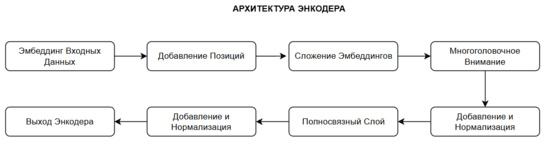
Figure 1 -- Operation diagram of a typical encoder
Since the encoder output is a set of words in the form of vectors, it is necessary to perform their positioning since the whole context is important. This procedure is realized by the blocks "Adding Positions" and "Embedding Embeddings". The next block provides the masking of multi-headed attention. This step implies that each word should take into account the others, but in reality it only takes into account the part before it, because the text is generated in steps. The data is then normalized for processing stability. Multi-headed attention is the process of allocating attention in which all words of a sentence are simultaneously considered in order to understand its meaning. At this stage, the decoder accesses the information given to it by the encoder and considers it when generating the text. The Full Layer block prepares information for the Linear Layer and Softmax block, which converts the data into probabilistic values to make a selection on the next word.
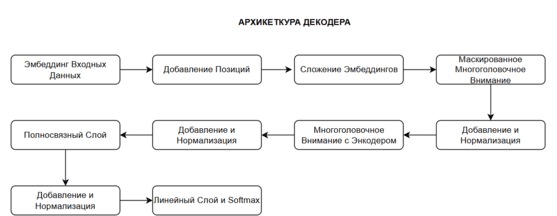
Figure 2 -- Scheme of a typical decoder operation
Operating Principles of the Transformer
The main focus of the transformer is the attention mechanism. It plays a crucial role in the way the network processes the input text and generates the output text. Unlike traditional neural networks, which process text sequentially, the transformer can use attention to "look" at all words in the text simultaneously, taking into account their relationship and context.
The attention mechanism allows the network to "focus" on the most relevant parts of the input text when generating the output text. It determines which words in the text are most important for understanding the meaning and predicting the next word in the sequence. This allows the network to "catch" the subtle relationships between words and create a more meaningful and coherent output text.
It is important to note that attention is not just "focusing" on a single word. Transformer utilizes multi-head attention, which allows the network to "look" at text from multiple perspectives simultaneously. Each "head" of attention focuses on a different aspect of the text, and then the information from all the "heads" is combined to provide a more complete view.
For example, when translating from English to Russian, one "head" of attention may focus on the grammatical structures of a sentence, while the other may focus on the lexical content. As a result, the network can take into account both grammatical and semantic aspects of the text when translating.
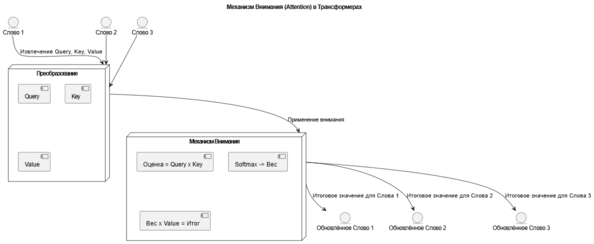
Figure 3 -- Attention mechanism architecture as a component diagram in UML language
The following key terms are used in this figure.
Input words are the individual words that are processed during attention.
Conversion - each input element (word) is converted into components: Query, Key and Value.
Attention mechanism applies attention to words where: Query interacts with Key to calculate the importance score. The result is passed through Softmax to get the weights. Weight component interacts with Value to get the final value.
Updated meaning - each word comes out with attention to other words.
Examples of Using Transformer in Real-World
Transformer architecture is widely used in various domains due to its ability to process sequences of data in a context-aware manner, which greatly enhances the performance of artificial intelligence models.
One of the most well-known applications of transformers is natural language processing. For example, systems such as Google Translate use transformers to translate text between languages, allowing them to achieve a high level of accuracy and be context-aware. Virtual assistants such as Alexa, Siri, and Google Assistant also use Transformers, allowing them to better understand user requests and support natural-sounding dialogs. Companies also actively use transformers to analyze sentiment in texts: it helps, for example, to process customer feedback and identify major problems or positive aspects.
Transformers are widely used for text generation in the creative domain. In tools such as autocomplete in Google Docs and Microsoft Word, transformers help to suggest appropriate continuations for text, making the writing process more convenient. In the creation of marketing materials and articles, transformers such as ChatGPT can generate content on given topics.
In education, transformers help create personalized assistants that can answer students' questions and suggest additional exercises. The systems based on them can automatically create short notes from large texts, which greatly simplifies the processing of educational material for students. One of the ideas that emerged was the creation of an assistant for writing essays for students. This idea is the basis for the creation of a real assistant for writing essays for students.
Conclusion
This paper analyzes the architecture and functioning principles of transformers, which are used in text generation and other natural language processing tasks. The main focus was on key aspects of transformers, including the attention mechanism, the process of positional encoding, the work of encoders and decoders, as well as the features of model learning. As a result of the analysis, we were able to identify the main principles of transformers' operation, such as the ability to effectively take into account the context in texts of any length, the use of attention mechanisms to highlight meaningful parts of the input data, and their adaptability for different tasks.
An important conclusion of this paper is that transformers have great potential for the development of new intelligent systems that can help people in everyday life. One of the possible areas of practical application could be the creation of a system to assist students in writing essays. Such a system could analyze input topics, generate structured and logically verified texts, as well as help revise the already written materials. The analysis shows that transformers can become the basis for the development of highly efficient text processing tools that can improve the quality and speed of various tasks with texts. This opens up prospects for further study and implementation of transformers in various industries.
References
- Berezhnov N.I., Sirota A.A. Improvement of attention mechanisms for transformer architecture in image quality enhancement tasks // Computer Optics. 2024. No. 5 Vol.48. P. 726-733.
- Vasiliev D.D. Using T5 language models for text simplification task // Software Products and Systems. 2023. No. 2 (182). P. 228-236.
- Kotenko V.V. Prospects for the development of neural machine translation in the context of the concept of open education // Scientific notes of the Lesgaft University. 2020. No. 4 (182). P. 225-231.
- Nikolaev I.E., Melnikov A.V. Comparison of neural network models on transformer architecture in the context of the task of assessing the compactness of vector representations // Bulletin of SUSU. 2022. No. 3 Vol. 22. P. 19-29.
- Samokhin I.S. Some weaknesses of modern machine translation (on the example of the web service "Google Translate") // Scientific Dialogue. 2018. No. 10. P. 148-157.
- Uzkikh G.Yu. Application of transformers in natural language processing // Science Bulletin. 2024. No. 8 (77) Vol. 4. P. 310-312.
- Chuchupal V.Ya. Neural network language models for speech recognition systems // Speech Technology. 2020.
- Berg H.P. Recurrent neural networks for dynamic reliability analysis / H.P. Berg, T. Frohmed // Reliability: Theory & Applications. 2018. No. 2. P. 23-35.
- Firsanova V. The advantages of human evaluation of sociomedical question answering systems // International Journal of Open Information Technologies. 2021. No. 12. P. 53-59.
Белоконь Л.О., Куксина О.И. Архитектурно-функциональный анализ трансформеров в автоматической генерации. В данной статье представлен анализ архитектуры трансформеров и их применение в задачах генерации текста. Были подробно описаны основные этапы обработки входного текста, особое внимание было уделено отличительным операционным характеристикам моделей трансформеров. Рассмотрение конкретных примеров использования трансформеров позволяет не только получить представление о текущем состоянии дел, но и указать на конкретные области, требующие дальнейшего изучения и улучшения практической реализации этих алгоритмов на программном уровне.
Ключевые слова: трансформер, искусственный интеллект, GPT, кодер, декодер, механизм внимания.
Belokon L.O., Kuksina O.I. Architectural and Functional Analysis of Transformers in Automatic Generation. This article presents an analysis of the transformer architecture and its application to text generation tasks. The fundamental steps involved in input text processing have been specified focusing on the distinctive operational characteristics of transformer models. Studying specific examples of transformer utilization not only provides insight into the current situation in this sphere of science but also points out particular areas which require further exploration and improvement in the practical implementation of these algorithms on the programme level.
Keywords: transformer, artificial intelligence, GPT, encoder, decoder, attention mechanism.